Showing posts with label clinical trial. Show all posts

Friday, 16 August 2013

Farmacéuticas extranjeras hacen experimentos con más de 23 mil peruanos

El INS investigó casos por violaciones a las buenas prácticas clínicas que ocasionaron daños serios y muertes de participantes


Nueve farmacéuticas extranjeras reclutan voluntarios para probar la seguridad y eficacia de sus nuevos productos antes de presentarlos al mercado. Según los registros de autorizaciones del Instituto Nacional de Salud (INS), 23.207 personas están enroladas actualmente en 300 experimentos que realizan laboratorios internacionales en 137 hospitales, clínicas, consultorios y hasta organizaciones no gubernamentales del Perú. Se trata de una actividad que continúa creciendo en nuestro país.

Este millonario y poco transparente negocio rebasa la capacidad del Estado. Comenzó el 2007 luego de que el entonces ministro de Salud, Carlos Vallejos, flexibilizara los trámites y condiciones para la experimentación médica con personas a través de 35 modificaciones al Reglamento Nacional de Ensayos Clínicos, que había sido aprobado en julio del 2006.

Justamente, Vallejos fue propulsor del cambio que dio lugar a un ‘boom’ de permisos y hoy figura entre los 15 médicos que concentran de 10 a más contratos con laboratorios y entidades privadas para ejecutar experimentos médicos con personas en el país, de acuerdo con los reportes del INS a los que accedió El Comercio, a través de una solicitud de información pública.

La información financiera y los pagos por esta actividad se considera confidencial. Pero profesionales que laboran en el campo –y que prefirieron mantener su nombre en reserva- revelaron que por cada persona enrolada para las prácticas, los médicos reciben de 500 a 13 mil dólares, y que los montos aumentan dependiendo de los riesgos del producto en investigación y la complejidad de los procedimientos.

VIOLACIONES A LAS BUENAS PRÁCTICAS

Desde que existe un reglamento para la experimentación con personas en el país, el INS investigó 19 casos por violaciones a las buenas prácticas clínicas que ocasionaron daños serios y muertes de participantes en experimentos. Sin embargo, la norma no contempla una escala de sanciones a los financistas y médicos que violan las buenas prácticas clínicas durante investigaciones y ocasionan daños serios o la muerte de personas.

Un caso es el del cardiólogo Álex Gallegos Cazorla. El INS determinará si ratifica o levanta la sanción en su contra por reclutar a un paciente para el experimento de una farmacéutica, en el hospital Daniel Alcides Carrión del Callao, y abandonarlo cuando su salud sufrió daños irreversibles que lo condujeron a la muerte en el 2011.

Ramón Ríos Astudillo (56) ingresó el 9 de setiembre del 2009 a un estudio para probar la eficacia del anticoagulante Apixiban, del laboratorio Brystol Myers Squibb Perú S.A.C., dirigido a personas con el diagnóstico de síndrome coronario agudo (arterias obstruidas por la coagulación de la sangre). “El doctor Gallegos le dijo a mi esposo que sería una buena alternativa para su enfermedad, pero Ramón sufrió demasiadas complicaciones. Le tuvieron que amputar la pierna izquierda en el 2010 y el médico se desentendió del todo”, narró a El Comercio, Victoria Izarnótegui viuda de Ríos, quien desde hace dos años reclama justicia.

Monday, 15 July 2013

Do clinical trials work? It depends on what you mean by “work”

One of the issues I discussed at our SBM workshop was something I’ve written before, namely the “methodolatry” that sometimes infests evidence-based medicine (EBM), “Methodolatry” has been defined as the profane worship of the randomized clinical trial (RCT) as the only valid method of clinical investigation, and it’s a symptom of the way that EBM relegates basic science knowledge, even well-established principles of science that show that something like, say, homeopathy or reiki is impossible under the current understanding of physics, chemistry and biology. However, never let it be said that RCTs aren’t actually important in SBM. Our problem with how EBM worships them derives from how it even bothers to do trials in the first place of modalities that can best be described by Harriet Hall’s brilliant appellation, Tooth Fairy Science. However, these days RCTs are widely perceived to have a serious problem. They have become so expensive to do and there have been so many failures of drugs that looked promising to show efficacy in clinical trials that some have even questioned whether there is something fundamentally wrong with how we do clinical trials now. Some even ask, as the title of an article by Clifton Leaf that appeared in the New York Times over the weekend, Do Clinical Trials Work?

It begins with the story of Avastin in brain tumors. I’m sure that Eric Merola will likely jump all over this, given how he tried to use the example of Avastin being approved for glioma on fast track approval that used phase II trials as the basis for doing so as an argument for why antineoplastons should be approved by the FDA. Or maybe he won’t. Here’s why. The story explains that there were two single-arm trials of adding Avastin to glioma therapy in which the tumors “shrank and the disease seemed to stall for several months when patients were given the drug.” Then Clifton points out the results of the randomized clinical trial presented at the American Society of Clinical Oncology (ASCO) meeting a month and a half ago:

But to the surprise of many, Dr. Gilbert’s study found no difference in survival between those who were given Avastin and those who were given a placebo.

Disappointing though its outcome was, the study represented a victory for science over guesswork, of hard data over hunches. As far as clinical trials went, Dr. Gilbert’s study was the gold standard. The earlier studies had each been “single-arm,” in the lingo of clinical trials, meaning there had been no comparison group. In Dr. Gilbert’s study, more than 600 brain cancer patients were randomly assigned to two evenly balanced groups: an intervention arm (those who got Avastin along with a standard treatment) and a control arm (those who got the latter and a placebo). What’s more, the study was “double-blind” — neither the patients nor the doctors knew who was in which group until after the results had been assessed.

The centerpiece of the country’s drug-testing system — the randomized, controlled trial — had worked.

This study could certainly be taken as evidence supporting a position that we shouldn’t approve drugs based on single-arm phase II clinical trials, even under fast track. It is indeed a very good example of how promising phase II clinical trial results are not always validated when the bigger and more rigorous phase III RCTs are performed. In one way, it is a good thing. Negative results, be they experimental or clinical trial, are just as important in science as positive results, if not more so. In another way, however, it’s a bad thing because, as the NYT article points out, “doctors had no more clarity after the trial about how to treat brain cancer patients than they had before.” A seemingly promising addition to the armamentarium against a deadly cancer that has too few effective treatments was shown not to work in an RCT that was designed to be, more or less, definitive. However, the key thing to remember about such an RCT is that it is looking at populations of patients. Overall, there was no difference in overall survival between the control and Avastin group, but that doesn’t necessarily mean that Avastin is useless against glioma.

Indeed, as someone who’s been studying angiogenesis and how to target it therapeutically in cancer since the heady days of the late 1990s, when findings by Judah Folkman and other pioneers in this field led to headlines in the lay press like “The Cure for Cancer” and it really did look as though the discovery that inhibiting angiogenesis produced dramatic results and outright cures in preclinical rodent models of cancer. Over the years, the study of angiogenesis has been gradually de-emphasized in my research, correlating inversely with the rise of other interests, but I do have a small project in targeting tumor-induced angiogenesis still ongoing and hope to publish on it before the end of the year. In any case, reality shut down those heady days, as it became clear that Avastin and other antiangiogenics were not as nontoxic in humans as they were in mice, nor were they nearly as effective. Still, it is clear that Avastin has contributed to significant increases in median survival in a number of tumor types, such as colorectal cancer. However, overall it’s hard not to conclude that antiangiogenic therapy has been, by and large, a disappointment, if only because the hype and hope were so sky-high 15 years ago. Rare indeed would have been the treatment that could have lived up to such expectations when tested in RCTs.

One thing that has been apparent for quite some time is that there appears to be a subset of patients who have remarkable responses to Avastin. Many oncologists get this feeling anecdotally, even if they don’t have evidence, and evidence has popped up in clinical trials. Assuming this is true, while it might not now make sense to treat all or most glioma patients with Avastin, it might very well make sense to treat that subset who have such dramatic responses if we could identify them beforehand. There’s the rub, though. We can’t, and Leaf points this out:

Some patients did do better on the drug, and indeed, doctors and patients insist that some who take Avastin significantly beat the average. But the trial was unable to discover these “responders” along the way, much less examine what might have accounted for the difference. (Dr. Gilbert is working to figure that out now.)

Indeed, even after some 400 completed clinical trials in various cancers, it’s not clear why Avastin works (or doesn’t work) in any single patient. “Despite looking at hundreds of potential predictive biomarkers, we do not currently have a way to predict who is most likely to respond to Avastin and who is not,” says a spokesperson for Genentech, a division of the Swiss pharmaceutical giant Roche, which makes the drug.

That we could be this uncertain about any medicine with $6 billion in annual global sales — and after 16 years of human trials involving tens of thousands of patients — is remarkable in itself. And yet this is the norm, not the exception. We are just as confused about a host of other long-tested therapies: neuroprotective drugs for stroke, erythropoiesis-stimulating agents for anemia, the antiviral drug Tamiflu — and, as recent headlines have shown, rosiglitazone (Avandia) for diabetes, a controversy that has now embroiled a related class of molecules. Which brings us to perhaps a more fundamental question, one that few people really want to ask: do clinical trials even work? Or are the diseases of individuals so particular that testing experimental medicines in broad groups is doomed to create more frustration than knowledge?

While it’s an excellent point that we don’t have predictive biomarkers (say, something in the blood we could measure) that tell us which patients are most likely to respond to Avastin (or most other drugs), Leaf seems to be indulging in a false dichotomy. Just because we don’t have predictive biomarkers for various drugs does not imply that clinical trials don’t work. Very clearly, they do. The problem is that they have limitations, and one of those limitations is that, without predictive biomarkers, we have no choice but to test the drug in a controlled population and see if there is a difference between control and the treated population that can be observed on a population level. The smaller the difference, the harder it is to detect and the more patients are needed to detect it. That’s why we need and want predictive biomarkers in the first place.

Worse, even the biomarkers we have are nowhere near 100% predictive. Let’s take a look at the prototypical targeted therapy, arguably the oldest targeted drug of all, Tamoxifen, which blocks estrogen activity. It is only used in tumors that make the estrogen receptor and are therefore presumed to be estrogen-responsive (i.e., estrogen stimulates them to grow). I remember a talk by the director of the Cancer Institute of New Jersey at the time I worked there, William Hait, who pointed out that Tamoxifen is effective in ER(+) cancers about 50% of the time. Around 70% of breast cancer is ER(+), and that means that if you treat all patients with breast cancer with Tamoxifen, you will see responses only 35% of the time, whereas if you treat only ER(+) cancers you will see responses 50% of the time. Another example is Herceptin, which targets amplified HER2 in breast cancer. Even though it is a targeted drug, it is effective against approximately 30% of HER2(+) cancers. Now, approximately 30% of breast cancers are HER2(+), which means that if you treat all comers with Herceptin, it will only be effective 0.3 x 0.3 = 0.09 (9%) of the time, but if you treat only HER2(+) cancers it should be effective 30% of the time. There are other examples he gave us. Taxol, for instance, is effective in 75% of breast cancer with p53 mutations. Since approximately 50% of breast cancers carry p53 mutations, if you treat all comers with Taxol you will get responses around 37.5% of the time, whereas if you treat only cancers with p53 mutations you should expect a 75% response rate. Of course, a 37.5% response rate is good enough that pretty much everyone with breast cancer who needs chemotherapy will get a Taxane, but you get the idea.

Now here’s where the devil is. These biomarkers that I’ve described are crude, and not even that predictive. But what, if anything, is better? That’s the problem, and that’s where most articles like this break down. They do an excellent job of identifying the problems with clinical trials, and there’s no doubt that Clifton Leaf does just that. None of these problems discussed in his NYT article are unfamiliar to most clinicians and clinical investigators, particularly in cancer. However, one notes that he has a book out entitled The Truth In Small Doses: Why We’re Losing the War on Cancer — and How to Win it. Personally, I hate that meme of “we’re losing the war on cancer,” because it’s not a war, and whether or not we’re “losing” depends on what your vision of “victory” is and how fast we can win the war. As I’ve pointed out many times, particularly around the 40th anniversary of Richard Nixon’s declaration of “war on cancer,” what do you expect in 40 years, given that the amount of resources we pour into this “war” are minuscule compared to what we spend on other things, such as—oh, you know—actual war? How much progress can we realistically expect in 40 years given that investment, the incredible complexity of cancer, and cancer’s ability to out-evolve almost anything we have as yet been able to throw at it. Clifton Leaf is a cancer survivor; so I can totally understand his frustration. However, that doesn’t stop his use of that tired old meme from irritating me. I’ll stop whining about that particular pet peeve of mine right now, but as everyone knows I do so love a good whine. Sorry.

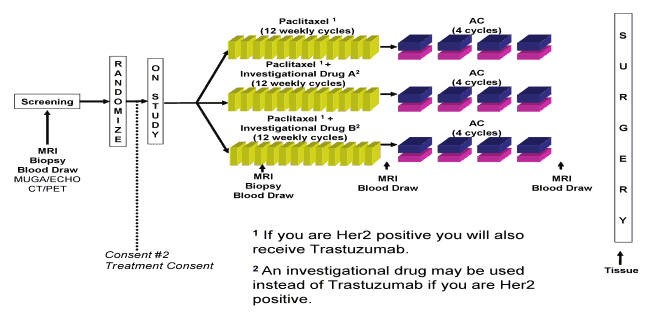
My pet peeve aside, what can we do better? Most of us in oncology believe that the answer will likely come down to personalized medicine based on the genomic profile of each cancer, but how to get from the enormous amount of data from genomic studies of various cancer to actual validated treatments is not at all clear at this stage (other knowing that Stanislaw Burzynski’s doing it wrong). Right now, personalized medicine has a lot of promise but has even more hype with little or nothing as yet in the way of concrete results that clearly benefit patients. Many have been the ideas to overcome these problems and validate genomic-based personalized medicine. Leaf actually mentions an interesting one: The I-SPY2 TRIAL (Investigation of Serial Studies to Predict Your Therapeutic Response with Imaging And moLecular Analysis 2). (Whew, what a name!) It’s a very interesting prototype of how clinical trials might be done in the future, and if it works I can see a lot more trials like this:

The I-SPY 2 TRIAL (Investigation of Serial Studies to Predict Your Therapeutic Response with Imaging And moLecular Analysis 2) is a clinical trial for women with newly diagnosed locally advanced breast cancer to test whether adding investigational drugs to standard chemotherapy is better than standard chemotherapy alone before having surgery. The treatment phase of this trial will be testing multiple investigational drugs that are thought to target the biology of each participant’s tumor. The trial will use the information from each participant who completes the study treatment to help decide treatment for future women who join the trial. This will help the study researchers learn more quickly which investigational drugs will be most beneficial for women with certain tumor characteristics. The I-SPY 2 TRIAL will test the idea of tailoring treatment by using molecular tests to help identify which patients should be treated with investigational drugs. Results of this trial may help make investigational drugs available to more women in the future.

The beauty of this trial is that it uses Bayesian analysis of responses to have the trial, in effect, evolve in response to what is found at earlier stages. My main quibble with the study is that it requires that all subjects undergo pretreatment breast MRI before surgery, which has a tendency to upstage women through the Will Rogers effect and thus result in more mastectomies. I understand that the trial investigators probably wanted advanced imaging to follow tumor response and that MRI can also show blood flow and therefore measure tumor angiogenesis, but I always worry when I see a design like this one, that it might promote unnecessary mastectomies. On the other hand, the inclusion criteria require a tumor that is 2.5 cm in diameter or greater so perhaps this will be less of a problem. That quibble aside, as Leaf describes, it is an intriguing design and it does evolve based on previous results:

In fact, a breast cancer trial called I-SPY 2, already under way, may be a good model to follow. The aim of the trial, sponsored by the Biomarkers Consortium, a partnership that includes the Foundation for the National Institutes of Health, the F.D.A., and others, is to figure out whether neoadjuvant therapy for breast cancer — administering drugs before a tumor is surgically removed — reduces recurrence of the disease, and if so, which drugs work best.

As with the Herceptin model, patients are being matched with experimental medicines that are designed to target a particular molecular subtype of breast cancer. But unlike in other trials, I-SPY 2 investigators, including Dr. Berry, are testing up to a dozen drugs from multiple companies, phasing out those that don’t appear to be working and subbing in others, without stopping the study.

Here’s the design (more details can be found here and here, and some of the investigational drugs tried can be found here):


The difficult part of the study, of course, is designing the algorithms by which drugs are swapped out as they appear not to be working. If these decisions are made willy-nilly, then this trial would be no better than what Burzynski does (i.e., making simplistic guesses). However, there is a sophisticated analysis and algorithm by which treatment decisions are made. It does have to be remembered, though, that, although I-SPY2 does represent personalized medicine, it is not yet full genomic medicine. Most of the biomarker tests used are biomarkers that already exist, and the additional biomarkers measured will not affect patient treatment. This part of the trial is for discovery of biomarkers, not validation.

The bottom line

I’ll be watching the progress of I-SPY2 closely, because it’s a new kind of clinical trial. Whether it will succeed in improving the success of the followup clinical trials of agents identified through I-SPY remains to be seen, as it also remains to be seen whether it will speed up the pace of discovery. I’m probably less hopeful than Clifton Leaf, but that doesn’t mean I’m not hopeful.

So do clinical trials work? It depends on what you mean by “clinical trials” and “work.” I would argue that they do, in fact, still work in that they are still the best method we have to determine whether science-based therapies with preclinical promise actually translate into useful therapies. They’re simply evolving with science, as they must under the “selective pressure” of advances in technology and understanding of biology.

Source

Sunday, 14 July 2013

Chinese clinical trials probed

Drugmakers have increasingly been turning to China for large clinical trials because they’re cheaper and there’s a bigger population of subjects to draw on.

Now U.S. regulators have stepped in, questioning sloppy data and irregularities from the world’s most populous country.

Bristol-Myers Squibb Co. and Pfizer Inc.’s blood thinner Eliquis, approved in December, was stalled for nine months because of misconduct, errors and an alleged cover-up attempt at a Chinese trial site overseen by Bristol-Myers, according to documents posted by the Food and Drug Administration. The delay came after the company told the FDA that patients got the wrong medicine, records were secretly changed and “serious adverse events” went unreported, the documents show.

The errors led to a lengthy reanalysis of the data and spurred a debate within the agency on what the drug’s label should say about its effectiveness. An agency official also questioned whether large trials in countries like China with similar data shortfalls were a viable basis for approving treatments, according to the documents.

The mistakes showed a “pattern of inadequate trial conduct and oversight,” according to minutes of a Feb. 9 agency meeting involving the two New York companies and the FDA, posted on the agency’s website.

Sales for Eliquis may one day reach $10 billion a year, according to analysts. The delay, though, may cut the time Eliquis is protected by patent, reducing revenue by billions of dollars.

The Eliquis case is an example of the increasing scrutiny the pharmaceutical industry is facing on its research in China, which offers a huge base of test subjects and costs that the Tufts Center for the Study of Drug Development says can be half those in the United States.

Drugmakers will keep having problems with sloppy data and misconduct as long as they keep doing trials in places like China without providing better oversight, said Thomas Marciniak, an FDA medical team leader who wasn’t directly involved in the Eliquis application but reviewed the trial independently.

“What we need is high-quality trials. If we’re not getting them in the low-cost areas, either fix the low-cost areas, or stop doing them,” Marciniak said in an interview, emphasizing that he was speaking for himself and not the agency.

Last month, London-based GlaxoSmithKline said it fired its head of Chinese research after the scientist allegedly misrepresented data that was published in a medical journal.

Bristol-Myers, which ran the Eliquis trial known as Aristotle, responded appropriately once the mistakes became known, said Elliott Levy, the company’s executive who oversaw the research. A reanalysis done by the company and the FDA deleted the questionable data and found it didn’t substantially affect the final, positive result, he said.

The mistakes “were not exceptional,” Levy said in a telephone interview. “The issues they raised required recourse to the primary source data and some months to fully evaluate, but they’re not exceptional issues.”

Asked whether the issues in China created concerns that other misconduct or bad data may have occurred in the trial, Levy said Bristol-Myers was confident they hadn’t. “I don’t think there’s anything unique about China in this regard,” Levy said. “We’ve looked closely at the quality of the data and reliability and it’s not distinguishable from the United States and Europe.”

Pfizer is confident in the trial results, said Mackay Jimeson, a spokesman for the company.

Christopher Granger, a professor of medicine at Duke University in Durham, N.C., who was the lead outside researcher on the trial, disagreed with Levy.

“There is a greater likelihood of some of this impropriety in certain regions,” Granger said in a telephone interview. “We’ve had experiences in India and China where we’ve had more than we would have expected.”

Eliquis was developed as a safer and easier-to-take replacement for warfarin, a half-century-old blood thinner widely used to combat blood clotting and strokes.

Pfizer, the world’s biggest drugmaker, and Bristol-Myers share sales on Eliquis, which competes with Boehringer Ingelheim’s Pradaxa, and Bayer and Johnson & Johnson’s Xarelto.

The final-stage trial of Eliquis began in 2006, and eventually grew to more than 1,000 sites in 40 countries, according to the FDA. About 16 percent of the 18,000 patients were in Asia, with three dozen sites located in China.

Doctors and hospitals who sign on as investigators are typically paid for getting patients to enroll in the trial. They’re overseen by the drug companies, which monitor the patients in coordination with the physicians. Much of that work is done by contract research organizations.

In the Eliquis trial, Bristol-Myers hired Pharmaceutical Product Development Inc., a closely held Wilmington, N.C., company known as PPD, to help oversee it.

The Eliquis trial was questioned on two issues, according to the FDA documents first cited by the journal Pharmaceutical Approvals Monthly.

One was the improper manipulation of records at a study site for 35 patients at the Shanghai 9th Peoples Hospital in China. The second involved the high percentage of the 9,000 patients who were supposed to be getting Eliquis, and instead were either given the wrong drug, or the wrong dose.

There was a broad list of issues at the Shanghai hospital, according to FDA documents.

They included failure to report four potential adverse medical events, late reports on three others and three medical outcomes that weren’t included in the data. The FDA also reported that some patient records disappeared just ahead of a site visit by agency inspectors.

“The records were altered in order to cover-up GCP violations which had occurred at the site,” the FDA said in its report. GCP stands for “good clinical practice.”

Levy disputed some aspects of the report. The company “examined the trial data at that site and found that all the primary endpoints and the key secondary endpoints were appropriately documented and reported,” he said.

Saturday, 13 July 2013

Are clinical trial data shared sufficiently today? No

When discussing transparency it is important to be clear on what is being requested, as obfuscation is sometimes used to avoid discussing simple fixes. At stake are four levels of information about trials:
  1. Knowledge that a trial has been conducted, from a clinical trials register.
  2. A brief summary of a trial’s results, in an academic journal article or regulatory summary.
  3. Longer details about the trial’s methods and results, from a clinical study report where available.
  4. Individual patient data.
The AllTrials campaign calls only for the first three to be published.

The status quo is plainly unsatisfactory. The most current review—with no cherry picking permitted—estimates that around half of all trials for the treatments being used today have gone unpublished; and that trials with positive results are twice as likely to be disseminated.1 This is a problem for both industry and academic trials.

Although some in industry claim that these problems are in the past, in reality all supposed fixes have failed. In 2005, journal editors passed regulations stating that they would publish only registered trials: the evidence now shows these regulations have been widely ignored.2 In 2007, US legislation was passed requiring all trials since 2008 to post results on clinicaltrials.gov within a year of completion: the best published evidence shows this law has been ignored by 60-90% of trials. If industry representatives believe these problems have been fixed, they should present published evidence to support their case, with methods and results that are available for public scrutiny.

Even if the latest rules on transparency were to be implemented perfectly—starting from now—they would still do nothing to improve the evidence base for the treatments we use today, because they all cover only trials from the past few years. More than 80% of the medicines prescribed this year were generic, and came on the market more than a decade ago. We need the results of trials on these treatments, which are still available, albeit on paper. It is both practical and reasonable to request that these documents should be simply scanned, and shared.

The arguments against this level of transparency are conflicted and misguided. John Castellani, of the Pharmaceutical Research and Manufacturers of America (PhRMA), has claimed previously that it’s enough for regulators alone to see all the information on trials, and to see it behind closed doors. But this goes against the fundamental principles of science: we rely on transparency about methods and results, so that every experiment can be double checked and critically appraised. Although he might not realise it, Castellani’s position also exposes patients to real and unnecessary risks. Many of the most notable recent problems with medicines—problems with rofecoxib (Vioxx) and rosiglitazone (Avandia), for example, and problems with the evidence base for oseltamivir (Tamiflu)—were spotted by independent academics and doctors, and not by regulators. This isn’t because regulators are incompetent; on the contrary, they are highly trained, intelligent, and well motivated. But risks and benefits can be difficult to detect, and like everything in science, these problems benefit from many eyes.

For similar reasons, it is peculiar to see industry argue that information should not be shared simply because there might be disputes about interpretation: disputed interpretations are widespread throughout science and medicine, they are normal, and this open debate is how we get closer to the truth. And likewise, we do not silence medical scaremongers in the media by hiding information about trials; if anything, routinely withholding trial results is more likely to undermine public trust.

Overall, the lack of progress on transparency has been startling. Some worry that these problems should not be discussed in public, while we fix them quietly behind closed doors. But the problem of withheld trial results has been documented since at least 1986, and industry has successfully delayed remedial efforts for three decades. The latest strategy has been to raise the spectre of patient privacy.

In February, for example, PhRMA released a colourful statement that misleadingly suggested that I and the BMJ have somehow called for the reckless public release of full individual patient data sets. They made this claim, despite the head of press relations at PhRMA already knowing that neither I nor the AllTrials campaign call for individual patient data to be published.

The BMJ has recently called for individual patient data to be made more widely available, in an editorial. 
Was this reckless and unreasonable? I don’t believe so. Where industry has shared data with researchers, it has been only piecemeal, and after enormous battles. But in many fields, there is already a long history of sensible and cautious sharing of detailed datasets—for example, to conduct individual patient data meta-analyses. These produce better estimates of treatment benefits, and improve care for patients, with appropriate concern for confidentiality. The Early Breast Cancer Trialists Collaborative Group’s meta-analyses, already published, represent just one notable example. The YODA project at Yale is looking at best practice for data sharing, as are many other groups. What’s more, the European Medicines Agency (EMA) has fully committed to sharing individual patient data after 2014, and are consulting only on the best mechanism to do so. These are reasonable and responsible things to discuss, as evidence based medicine moves forwards and becomes more effective. 

Is patient confidentiality also an issue when clinical study reports are shared, as AllTrials and I have suggested they should be? Clinical study reports are long documents—often thousands of pages—but they are important, because analyses have shown that the information published in academic journal reports on clinical trials can be misleading or inaccurate, when compared with these longer, definitive sources of information. These reports certainly do contain some information about individuals—for example, in narrative descriptions of adverse events—but such information can easily be removed, or shared only with named researchers, if this is deemed necessary. Some industry figures have claimed that removing this material is either impossible or prohibitively expensive. But in 2010 the European ombudsman made a ruling of maladministration against the EMA, for claiming exactly that. The ombudsman examined the clinical study reports requested from the agency in detail, and concluded that the administrative burden of removing patient information, where necessary, was small. The European ombudsman has also stated clearly that there is no important commercially confidential information in these reports—the fact that a drug is not as good as claimed is not, in itself, something any company can hope to ethically withhold from doctors and patients.13 Since then, the EMA has released 1.6 million pages of clinical study reports14 under its new policy.13 Because these documents are so informative—and because the EMA holds only a small proportion of all the clinical study reports in existence—alltrials.net is asking for all existing clinical study reports to be made available, on all medicines currently in use. 

This campaign has rapidly snowballed to become the mainstream position in the United Kingdom. AllTrials is now supported by more than 50 000 individuals, and 250 organizations, including more than 100 patient groups, the National Institute for Health and Care Excellence, academic funders such as the Medical Research Council and the Wellcome Trust, royal colleges, the Royal Pharmaceutical Society, the British Pharmacological Society, and the Faculty of Pharmaceutical Medicine, to name but a few. Ironically, within 24 hours of PhRMA denouncing our calls for greater transparency, GlaxoSmithKline—the world’s fourth largest drug company—signed up as supporters of alltrials.net. They have committed to do the very thing that PhRMA says is impossible, and share all clinical study reports going back to the foundation of the company.

If the transparency we ask for is practical, and reasonable, then what lies behind the colourful denunciations of PhRMA? Speaking to policy staff in some signatory organizations, one worrying theme recurs. We knew that withholding trial data was common, people have said, and we knew that it harms patients, but we felt embarrassed to talk about it, because even raising the issue seemed somehow subversive. This is a worrying state of affairs, and a testament to the power of aggressive lobbying by industry. But it is also perhaps a testament to the capture of key opinion leaders, and the dangers of longstanding inaction at senior levels in the medical establishment. In the UK, we have seen the same phenomena during prominent inquiries into failing hospitals: many senior staff, in numerous organizations, all saw a problem, but most were too busy—or too anxious about workplace conflict—to put patients first.

The problem of missing trials is one of the greatest ethical and practical problems facing medicine today. It also represents a bizarre paradox: we can spend millions of dollars on a trial, hoping it is free from bias, trying to detect a modest difference between two treatment groups; and then at the final moment we let all those biases and errors back in, by permitting half the results to disappear. Future generations may well look back at our tolerating this in amazement, in the same way that we look back on mediaeval bloodletting. The AllTrials movement is driving the solution forwards: patients need industry to engage constructively with this widespread consensus, on the practical details—urgently—so that we can all move on.

Friday, 12 July 2013

The Truth About the Drug Companies

Every day Americans are subjected to a barrage of advertising by the pharmaceutical industry. Mixed in with the pitches for a particular drug—usually featuring beautiful people enjoying themselves in the great outdoors—is a more general message. Boiled down to its essentials, it is this: “Yes, prescription drugs are expensive, but that shows how valuable they are. Besides, our research and development costs are enormous, and we need to cover them somehow. As ‘research-based’ companies, we turn out a steady stream of innovative medicines that lengthen life, enhance its quality, and avert more expensive medical care. You are the beneficiaries of this ongoing achievement of the American free enterprise system, so be grateful, quit whining, and pay up.” More prosaically, what the industry is saying is that you get what you pay for.

Is any of this true? Well, the first part certainly is. Prescription drug costs are indeed high—and rising fast. Americans now spend a staggering $200 billion a year on prescription drugs, and that figure is growing at a rate of about 12 percent a year (down from a high of 18 percent in 1999). Drugs are the fastest-growing part of the health care bill—which itself is rising at an alarming rate. The increase in drug spending reflects, in almost equal parts, the facts that people are taking a lot more drugs than they used to, that those drugs are more likely to be expensive new ones instead of older, cheaper ones, and that the prices of the most heavily prescribed drugs are routinely jacked up, sometimes several times a year. 

Before its patent ran out, for example, the price of Schering-Plough’s top-selling allergy pill, Claritin, was raised thirteen times over five years, for a cumulative increase of more than 50 percent—over four times the rate of general inflation. As a spokeswoman for one company explained, “Price increases are not uncommon in the industry and this allows us to be able to invest in R&D.” In 2002, the average price of the fifty drugs most used by senior citizens was nearly $1,500 for a year’s supply. (Pricing varies greatly, but this refers to what the companies call the average wholesale price, which is usually pretty close to what an individual without insurance pays at the pharmacy.)

Paying for prescription drugs is no longer a problem just for poor people. As the economy continues to struggle, health insurance is shrinking. Employers are requiring workers to pay more of the costs themselves, and many businesses are dropping health benefits altogether. Since prescription drug costs are rising so fast, payers are particularly eager to get out from under them by shifting costs to individuals. The result is that more people have to pay a greater fraction of their drug bills out of pocket. And that packs a wallop.

Many of them simply can’t do it. They trade off drugs against home heating or food. Some people try to string out their drugs by taking them less often than prescribed, or sharing them with a spouse. Others, too embarrassed to admit that they can’t afford to pay for drugs, leave their doctors’ offices with prescriptions in hand but don’t have them filled. Not only do these patients go without needed treatment but their doctors sometimes wrongly conclude that the drugs they prescribed haven’t worked and prescribe yet others—thus compounding the problem.

The people hurting most are the elderly. When Medicare was enacted in 1965, people took far fewer prescription drugs and they were cheap. For that reason, no one thought it necessary to include an outpatient prescription drug benefit in the program. In those days, senior citizens could generally afford to buy whatever drugs they needed out of pocket. Approximately half to two thirds of the elderly have supplementary insurance that partly covers prescription drugs, but that percentage is dropping as employers and insurers decide it is a losing proposition for them. At the end of 2003, Congress passed a Medicare reform bill that included a prescription drug benefit scheduled to begin in 2006, but as we shall see later, its benefits are inadequate to begin with and will quickly be overtaken by rising prices and administrative costs.

For obvious reasons, the elderly tend to need more prescription drugs than younger people—mainly for chronic conditions like arthritis, diabetes, high blood pressure, and elevated cholesterol. In 2001, nearly one in four seniors reported that they skipped doses or did not fill prescriptions because of the cost. (That fraction is almost certainly higher now.) Sadly, the frailest are the least likely to have supplementary insurance. At an average cost of $1,500 a year for each drug, someone without supplementary insurance who takes six different prescription drugs—and this is not rare—would have to spend $9,000 out of pocket. Not many among the old and frail have such deep pockets.

Furthermore, in one of the more perverse of the pharmaceutical industry’s practices, prices are much higher for precisely the people who most need the drugs and can least afford them. The industry charges Medicare recipients without supplementary insurance much more than it does favored customers, such as large HMOs or the Veterans Affairs (VA) system. Because the latter buy in bulk, they can bargain for steep discounts or rebates. People without insurance have no bargaining power; and so they pay the highest prices.

In the past two years, we have started to see, for the first time, the beginnings of public resistance to rapacious pricing and other dubious practices of the pharmaceutical industry. It is mainly because of this resistance that drug companies are now blanketing us with public relations messages. And the magic words, repeated over and over like an incantation, are research, innovation, and American. Research. Innovation. American. It makes a great story.

But while the rhetoric is stirring, it has very little to do with reality. First, research and development (R&D) is a relatively small part of the budgets of the big drug companies—dwarfed by their vast expenditures on marketing and administration, and smaller even than profits. In fact, year after year, for over two decades, this industry has been far and away the most profitable in the United States. (In 2003, for the first time, the industry lost its first-place position, coming in third, behind “mining, crude oil production,” and “commercial banks.”) The prices drug companies charge have little relationship to the costs of making the drugs and could be cut dramatically without coming anywhere close to threatening R&D.

Second, the pharmaceutical industry is not especially innovative. As hard as it is to believe, only a handful of truly important drugs have been brought to market in recent years, and they were mostly based on taxpayer-funded research at academic institutions, small biotechnology companies, or the National Institutes of Health (NIH). The great majority of “new” drugs are not new at all but merely variations of older drugs already on the market. These are called “me-too” drugs. The idea is to grab a share of an established, lucrative market by producing something very similar to a top-selling drug. For instance, we now have six statins (Mevacor, Lipitor, Zocor, Pravachol, Lescol, and the newest, Crestor) on the market to lower cholesterol, all variants of the first. As Dr. Sharon Levine, associate executive director of the Kaiser Permanente Medical Group, put it:


"If I’m a manufacturer and I can change one molecule and get another twenty years of patent rights, and convince physicians to prescribe and consumers to demand the next form of Prilosec, or weekly Prozac instead of daily Prozac, just as my patent expires, then why would I be spending money on a lot less certain endeavor, which is looking for brand-new drugs?"

Third, the industry is hardly a model of American free enterprise. To be sure, it is free to decide which drugs to develop (me-too drugs instead of innovative ones, for instance), and it is free to price them as high as the traffic will bear, but it is utterly dependent on government-granted monopolies—in the form of patents and Food and Drug Administration (FDA)–approved exclusive marketing rights. If it is not particularly innovative in discovering new drugs, it is highly innovative—and aggressive—in dreaming up ways to extend its monopoly rights.

And there is nothing peculiarly American about this industry. It is the very essence of a global enterprise. Roughly half of the largest drug companies are based in Europe. (The exact count shifts because of mergers.) In 2002, the top ten were the American companies Pfizer, Merck, Johnson & Johnson, Bristol-Myers Squibb, and Wyeth (formerly American Home Products); the British companies GlaxoSmithKline and AstraZeneca; the Swiss companies Novartis and Roche; and the French company Aventis (which in 2004 merged with another French company, Sanafi Synthelabo, putting it in third place). All are much alike in their operations. All price their drugs much higher here than in other markets. 

Since the United States is the major profit center, it is simply good public relations for drug companies to pass themselves off as American, whether they are or not. It is true, however, that some of the European companies are now locating their R&D operations in the United States. They claim the reason for this is that we don’t regulate prices, as does much of the rest of the world. But more likely it is that they want to feed on the unparalleled research output of American universities and the NIH. In other words, it’s not private enterprise that draws them here but the very opposite—our publicly sponsored research enterprise.

Over the past two decades the pharmaceutical industry has moved very far from its original high purpose of discovering and producing useful new drugs. Now primarily a marketing machine to sell drugs of dubious benefit, this industry uses its wealth and power to co-opt every institution that might stand in its way, including the US Congress, the FDA, academic medical centers, and the medical profession itself. (Most of its marketing efforts are focused on influencing doctors, since they must write the prescriptions.)

If prescription drugs were like ordinary consumer goods, all this might not matter very much. But drugs are different. People depend on them for their health and even their lives. In the words of Senator Debbie Stabenow (D-Mich.), “It’s not like buying a car or tennis shoes or peanut butter.” People need to know that there are some checks and balances on this industry, so that its quest for profits doesn’t push every other consideration aside. But there aren’t such checks and balances.

What does the eight-hundred-pound gorilla do? Anything it wants to.

What’s true of the eight-hundred-pound gorilla is true of the colossus that is the pharmaceutical industry. It is used to doing pretty much what it wants to do. The watershed year was 1980. Before then, it was a good business, but afterward, it was a stupendous one. From 1960 to 1980, prescription drug sales were fairly static as a percent of US gross domestic product, but from 1980 to 2000, they tripled. They now stand at more than $200 billion a year.6 Of the many events that contributed to the industry’s great and good fortune, none had to do with the quality of the drugs the companies were selling.

The claim that drugs are a $200 billion industry is an understatement. According to government sources, that is roughly how much Americans spent on prescription drugs in 2002. That figure refers to direct consumer purchases at drugstores and mail-order pharmacies (whether paid for out of pocket or not), and it includes the nearly 25 percent markup for wholesalers, pharmacists, and other middlemen and retailers. But it does not include the large amounts spent for drugs administered in hospitals, nursing homes, or doctors’ offices (as is the case for many cancer drugs). In most analyses, they are allocated to costs for those facilities.

Drug company revenues (or sales) are a little different, at least as they are reported in summaries of corporate annual reports. They usually refer to a company’s worldwide sales, including those to health facilities. But they do not include the revenues of middlemen and retailers.

Perhaps the most quoted source of statistics on the pharmaceutical industry, IMS Health, estimated total worldwide sales for prescription drugs to be about $400 billion in 2002. About half were in the United States. So the $200 billion colossus is really a $400 billion megacolossus.

The election of Ronald Reagan in 1980 was perhaps the fundamental element in the rapid rise of big pharma—the collective name for the largest drug companies. With the Reagan administration came a strong pro-business shift not only in government policies but in society at large. And with the shift, the public attitude toward great wealth changed. Before then, there was something faintly disreputable about really big fortunes. You could choose to do well or you could choose to do good, but most people who had any choice in the matter thought it difficult to do both. That belief was particularly strong among scientists and other intellectuals. They could choose to live a comfortable but not luxurious life in academia, hoping to do exciting cutting-edge research, or they could “sell out” to industry and do less important but more remunerative work. Starting in the Reagan years and continuing through the 1990s, Americans changed their tune. It became not only reputable to be wealthy, but something close to virtuous. There were “winners” and there were “losers,” and the winners were rich and deserved to be. The gap between the rich and poor, which had been narrowing since World War II, suddenly began to widen again, until today it is a chasm.

The pharmaceutical industry and its CEOs quickly joined the ranks of the winners as a result of a number of business-friendly government actions. I won’t enumerate all of them, but two are especially important. Beginning in 1980, Congress enacted a series of laws designed to speed the translation of tax-supported basic research into useful new products—a process sometimes referred to as “technology transfer.” The goal was also to improve the position of American-owned high-tech businesses in world markets.

The most important of these laws is known as the Bayh-Dole Act, after its chief sponsors, Senator Birch Bayh (D-Ind.) and Senator Robert Dole (R-Kans.). Bayh-Dole enabled universities and small businesses to patent discoveries emanating from research sponsored by the National Institutes of Health, the major distributor of tax dollars for medical research, and then to grant exclusive licenses to drug companies. Until then, taxpayer-financed discoveries were in the public domain, available to any company that wanted to use them. But now universities, where most NIH-sponsored work is carried out, can patent and license their discoveries, and charge royalties. Similar legislation permitted the NIH itself to enter into deals with drug companies that would directly transfer NIH discoveries to industry.

Bayh-Dole gave a tremendous boost to the nascent biotechnology industry, as well as to big pharma. Small biotech companies, many of them founded by university researchers to exploit their discoveries, proliferated rapidly. They now ring the major academic research institutions and often carry out the initial phases of drug development, hoping for lucrative deals with big drug companies that can market the new drugs. Usually both academic researchers and their institutions own equity in the biotechnology companies they are involved with. Thus, when a patent held by a university or a small biotech company is eventually licensed to a big drug company, all parties cash in on the public investment in research.

These laws mean that drug companies no longer have to rely on their own research for new drugs, and few of the large ones do. Increasingly, they rely on academia, small biotech startup companies, and the NIH for that. At least a third of drugs marketed by the major drug companies are now licensed from universities or small biotech companies, and these tend to be the most innovative ones. While Bayh-Dole was clearly a bonanza for big pharma and the biotech industry, whether its enactment was a net benefit to the public is arguable.

The Reagan years and Bayh-Dole also transformed the ethos of medical schools and teaching hospitals. These nonprofit institutions started to see themselves as “partners” of industry, and they became just as enthusiastic as any entrepreneur about the opportunities to parlay their discoveries into financial gain. Faculty researchers were encouraged to obtain patents on their work (which were assigned to their universities), and they shared in the royalties. Many medical schools and teaching hospitals set up “technology transfer” offices to help in this activity and capitalize on faculty discoveries. As the entrepreneurial spirit grew during the 1990s, medical school faculty entered into other lucrative financial arrangements with drug companies, as did their parent institutions.

One of the results has been a growing pro-industry bias in medical research—exactly where such bias doesn’t belong. Faculty members who had earlier contented themselves with what was once referred to as a “threadbare but genteel” lifestyle began to ask themselves, in the words of my grandmother, “If you’re so smart, why aren’t you rich?” Medical schools and teaching hospitals, for their part, put more resources into searching for commercial opportunities.

Starting in 1984, with legislation known as the Hatch-Waxman Act, Congress passed another series of laws that were just as big a bonanza for the pharmaceutical industry. These laws extended monopoly rights for brand-name drugs. Exclusivity is the lifeblood of the industry because it means that no other company may sell the same drug for a set period. After exclusive marketing rights expire, copies (called generic drugs) enter the market, and the price usually falls to as little as 20 percent of what it was. There are two forms of monopoly rights—patents granted by the US Patent and Trade Office (USPTO) and exclusivity granted by the FDA. While related, they operate somewhat independently, almost as backups for each other. Hatch-Waxman, named for Senator Orrin Hatch (R-Utah) and Representative Henry Waxman (D-Calif.), was meant mainly to stimulate the foundering generic industry by short-circuiting some of the FDA requirements for bringing generic drugs to market. While successful in doing that, Hatch-Waxman also lengthened the patent life for brand-name drugs. Since then, industry lawyers have manipulated some of its provisions to extend patents far longer than the lawmakers intended.

In the 1990s, Congress enacted other laws that further increased the patent life of brand-name drugs. Drug companies now employ small armies of lawyers to milk these laws for all they’re worth—and they’re worth a lot. The result is that the effective patent life of brand-name drugs increased from about eight years in 1980 to about fourteen years in 2000.10 For a blockbuster—usually defined as a drug with sales of over a billion dollars a year (like Lipitor or Celebrex or Zoloft)—those six years of additional exclusivity are golden. They can add billions of dollars to sales—enough to buy a lot of lawyers and have plenty of change left over. No wonder big pharma will do almost anything to protect exclusive marketing rights, despite the fact that doing so flies in the face of all its rhetoric about the free market.

As their profits skyrocketed during the 1980s and 1990s, so did the political power of drug companies. By 1990, the industry had assumed its present contours as a business with unprecedented control over its own fortunes. For example, if it didn’t like something about the FDA, the federal agency that is supposed to regulate the industry, it could change it through direct pressure or through its friends in Congress. The top ten drug companies (which included European companies) had profits of nearly 25 percent of sales in 1990, and except for a dip at the time of President Bill Clinton’s health care reform proposal, profits as a percentage of sales remained about the same for the next decade. (Of course, in absolute terms, as sales mounted, so did profits.) In 2001, the ten American drug companies in the Fortune 500 list (not quite the same as the top ten worldwide, but their profit margins are much the same) ranked far above all other American industries in average net return, whether as a percentage of sales (18.5 percent), of assets (16.3 percent), or of shareholders’ equity (33.2 percent). These are astonishing margins. For comparison, the median net return for all other industries in the Fortune 500 was only 3.3 percent of sales. Commercial banking, itself no slouch as an aggressive industry with many friends in high places, was a distant second, at 13.5 percent of sales.

In 2002, as the economic downturn continued, big pharma showed only a slight drop in profits—from 18.5 to 17.0 percent of sales. The most startling fact about 2002 is that the combined profits for the ten drug companies in the Fortune 500 ($35.9 billion) were more than the profits for all the other 490 businesses put together ($33.7 billion). In 2003 profits of the Fortune 500 drug companies dropped to 14.3 percent of sales, still well above the median for all industries of 4.6 percent for that year. When I say this is a profitable industry, I mean really profitable. It is difficult to conceive of how awash in money big pharma is.

Drug industry expenditures for research and development, while large, were consistently far less than profits. For the top ten companies, they amounted to only 11 percent of sales in 1990, rising slightly to 14 percent in 2000. The biggest single item in the budget is neither R&D nor even profits but something usually called “marketing and administration”—a name that varies slightly from company to company. In 1990, a staggering 36 percent of sales revenues went into this category, and that proportion remained about the same for over a decade.13 Note that this is two and a half times the expenditures for R&D.

These figures are drawn from the industry’s own annual reports to the Securities and Exchange Commission (SEC) and to stockholders, but what actually goes into these categories is not at all clear, because drug companies hold that information very close to their chests. It is likely, for instance, that R&D includes many activities most people would consider marketing, but no one can know for sure. For its part, “marketing and administration” is a gigantic black box that probably includes what the industry calls “education,” as well as advertising and promotion, legal costs, and executive salaries—which are whopping. According to a report by the non-profit group Families USA, the for-mer chairman and CEO of Bristol-Myers Squibb, Charles A. Heimbold Jr., made $74,890,918 in 2001, not counting his $76,095,611 worth of unexercised stock options. The chairman of Wyeth made $40,521,011, exclusive of his $40,629,459 in stock options. And so on.

If 1980 was a watershed year for the pharmaceutical industry, 2000 may very well turn out to have been another one—the year things began to go wrong. As the booming economy of the late 1990s turned sour, many successful businesses found themselves in trouble. And as tax revenues dropped, state governments also found themselves in trouble. In one respect, the pharmaceutical industry is well protected against the downturn, since it has so much wealth and power. But in another respect, it is peculiarly vulnerable, since it depends on employer-sponsored insurance and state-run Medicaid programs for much of its revenues. When employers and states are in trouble, so is big pharma.

And sure enough, in just the past couple of years, employers and the private health insurers with whom they contract have started to push back against drug costs. Most big managed care plans now bargain for steep price discounts. Most have also instituted three-tiered coverage for prescription drugs—full coverage for generic drugs, partial coverage for useful brand-name drugs, and no coverage for expensive drugs that offer no added benefit over cheaper ones. These lists of preferred drugs are called formularies, and they are an increasingly important method for containing drug costs. Big pharma is feeling the effects of these measures, although not surprisingly, it has become adept at manipulating the system—mainly by inducing doctors or health plans to put expensive, brand-name drugs on formularies.

State governments, too, are looking for ways to cut their drug costs. Some state legislatures are drafting measures that would permit them to regulate prescription drug prices for state employees, Medicaid recipients, and the uninsured. Like managed care plans, they are creating formularies of preferred drugs. The industry is fighting these efforts—mainly with its legions of lobbyists and lawyers. It fought the state of Maine all the way to the US Supreme Court, which in 2003 upheld Maine’s right to bargain with drug companies for lower prices, while leaving open the details. But that war has just begun, and it promises to go on for years and get very ugly.

Recently the public has shown signs of being fed up. The fact that Americans pay much more for prescription drugs than Europeans and Canadians is now widely known. An estimated one to two million Americans buy their medicines from Canadian drugstores over the Internet, despite the fact that in 1987, in response to heavy industry lobbying, a compliant Congress had made it illegal for anyone other than manufacturers to import prescription drugs from other countries.15 In addition, there is a brisk traffic in bus trips for people in border states, particularly the elderly, to travel to Canada or Mexico to buy prescription drugs. Their resentment is palpable, and they constitute a powerful voter block—a fact not lost on Congress or state legislatures.

The industry faces other, less familiar problems. It happens that, by chance, some of the top-selling drugs—with combined sales of around $35 billion a year—are scheduled to go off patent within a few years of one another.16 This drop over the cliff began in 2001, with the expiration of Eli Lilly’s patent on its blockbuster antidepressant Prozac. In the same year, AstraZeneca lost its patent on Prilosec, the original “purple pill” for heartburn, which at its peak brought in a stunning $6 billion a year. Bristol-Myers Squibb lost its best-selling diabetes drug, Glucophage. The unusual cluster of expirations will continue for another couple of years. While it represents a huge loss to the industry as a whole, for some companies it’s a disaster. Schering-Plough’s blockbuster allergy drug, Claritin, brought in fully a third of that company’s revenues before its patent expired in 2002. Claritin is now sold over the counter for much less than its prescription price. So far, the company has been unable to make up for the loss by trying to switch Claritin users to Clarinex—a drug that is virtually identical but has the advantage of still being on patent.

Even worse is the fact that there are very few drugs in the pipeline ready to take the place of blockbusters going off patent. In fact, that is the biggest problem facing the industry today, and its darkest secret. All the public relations about innovation is meant to obscure precisely this fact. The stream of new drugs has slowed to a trickle, and few of them are innovative in any sense of that word. Instead, the great majority are variations of oldies but goodies—”me-too” drugs.

Of the seventy-eight drugs approved by the FDA in 2002, only seventeen contained new active ingredients, and only seven of these were classified by the FDA as improvements over older drugs. The other seventy-one drugs approved that year were variations of old drugs or deemed no better than drugs already on the market. In other words, they were me-too drugs. Seven of seventy-eight is not much of a yield. Furthermore, of those seven, not one came from a major US drug company.

For the first time, in just a few short years, the gigantic pharmaceutical industry is finding itself in serious difficulty. It is facing, as one industry spokesman put it, “a perfect storm.” To be sure, profits are still beyond anything most other industries could hope for, but they have recently fallen, and for some companies they fell a lot. And that is what matters to investors. Wall Street doesn’t care how high profits are today, only how high they will be tomorrow. For some companies, stock prices have plummeted. Nevertheless, the industry keeps promising a bright new day. It bases its reassurances on the notion that the mapping of the human genome and the accompanying burst in genetic research will yield a cornucopia of important new drugs. Left unsaid is the fact that big pharma is depending on government, universities, and small biotech companies for that innovation. While there is no doubt that genetic discoveries will lead to treatments, the fact remains that it will probably be years before the basic research pays off with new drugs. In the meantime, the once-solid foundations of the big pharma colossus are shaking.

The hints of trouble and the public’s growing resentment over high prices are producing the first cracks in the industry’s formerly firm support in Washington. In 2000, Congress passed legislation that would have closed some of the loopholes in Hatch-Waxman and also permitted American pharmacies, as well as individuals, to import drugs from certain countries where prices are lower. In particular, they could buy back FDA-approved drugs from Canada that had been exported there. It sounds silly to “reimport” drugs that are marketed in the United States, but even with the added transaction costs, doing so is cheaper than buying them here. But the bill required the secretary of health and human services to certify that the practice would not pose any “added risk” to the public, and secretaries in both the Clinton and Bush administrations, under pressure from the industry, refused to do that.

The industry is also being hit with a tidal wave of government investigations and civil and criminal lawsuits. The litany of charges includes illegally overcharging Medicaid and Medicare, paying kickbacks to doctors, engaging in anticompetitive practices, colluding with generic companies to keep generic drugs off the market, illegally promoting drugs for unapproved uses, engaging in misleading direct-to-consumer advertising, and, of course, covering up evidence. Some of the settlements have been huge. TAP Pharmaceuticals, for instance, paid $875 million to settle civil and criminal charges of Medicaid and Medicare fraud in the marketing of its prostate cancer drug, Lupron.19 All of these efforts could be summed up as increasingly desperate marketing and patent games, activities that always skirted the edge of legality but now are sometimes well on the other side.

How is the pharmaceutical industry responding to its difficulties? One could hope drug companies would decide to make some changes—trim their prices, or at least make them more equitable, and put more of their money into trying to discover genuinely innovative drugs, instead of just talking about it. But that is not what is happening. Instead, drug companies are doing more of what got them into this situation. They are marketing their me-too drugs even more relentlessly. They are pushing even harder to extend their monopolies on top-selling drugs. And they are pouring more money into lobbying and political campaigns. As for innovation, they are still waiting for Godot.

The news is not all bad for the industry. The Medicare prescription drug benefit enacted in 2003, and scheduled to go into effect in 2006, promises a windfall for big pharma since it forbids the government from negotiating prices. The immediate jump in pharmaceutical stock prices after the bill passed indicated that the industry and investors were well aware of the windfall. But at best, this legislation will be only a temporary boost for the industry. As costs rise, Congress will have to reconsider its industry-friendly decision to allow drug companies to set their own prices, no questions asked.

This is an industry that in some ways is like the Wizard of Oz—still full of bluster but now being exposed as something far different from its image. Instead of being an engine of innovation, it is a vast marketing machine. Instead of being a free market success story, it lives off government-funded research and monopoly rights. Yet this industry occupies an essential role in the American health care system, and it performs a valuable function, if not in discovering important new drugs at least in developing them and bringing them to market. But big pharma is extravagantly rewarded for its relatively modest functions. We get nowhere near our money’s worth. The United States can no longer afford it in its present form.

Clearly, the pharmaceutical industry is due for fundamental reform. Reform will have to extend beyond the industry to the agencies and institutions it has co-opted, including the FDA and the medical profession and its teaching centers. In my forthcoming book, The Truth About the Drug Companies, I discuss the major reforms that will be necessary.

For example, we need to get the industry to focus on discovering truly innovative drugs instead of turning out me-too drugs (and spending billions of dollars to promote them as though they were miracles). The me-too business is made possible by the fact that the FDA usually approves a drug only if it is better than a placebo. It needn’t be better than an older drug already on the market to treat the same condition; in fact, it may be worse. There is no way of knowing, since companies generally do not test their new drugs against older ones for the same conditions at equivalent doses. (For obvious reasons, they would rather not find the answer.) They should be required to do so.

The me-too market would collapse virtually overnight if the FDA made approval of new drugs contingent on their being better in some important way than older drugs already on the market. Probably very few new drugs could meet that test. By default, then, drug companies would have to concentrate on finding truly innovative drugs, and we would finally find out whether this much-vaunted industry is turning out better drugs. A welcome by-product of this reform is that it would also reduce the incessant and enormously expensive marketing necessary to jockey for position in the me-too market. Genuinely important new drugs do not need much promotion (imagine having to advertise a cure for cancer).

A second important reform would be to require drug companies to open their books. Drug companies reveal very little about the most crucial aspects of their business. We know next to nothing about how much they spend to bring each drug to market or what they spend it on. (We know that it is not $802 million, as some industry apologists have recently claimed.) Nor do we know what their gigantic “marketing and administration” budgets cover. We don’t even know the prices they charge their various customers. Perhaps most important, we do not know the results of the clinical trials they sponsor—only those they choose to make public, which tend to be the most favorable findings. (The FDA is not allowed to reveal the results it has.) The industry claims all of this is “proprietary” information. Yet, unlike other businesses, drug companies are dependent on the public for a host of special favors—including the rights to NIH-funded research, long periods of market monopoly, and multiple tax breaks that almost guarantee a profit. Because of these special favors and the importance of its products to public health, as well as the fact that the government is a major purchaser of its products, the pharmaceutical industry should be regarded much as a public utility.

These are just two of many reforms I advocate in my book. Some of the others have to do with breaking the dependence of the medical profession on the industry and with the inappropriate control drug companies have over the evaluation of their own products. The sort of thoroughgoing changes required will take government action, which in turn will require strong public pressure. It will be tough. Drug companies have the largest lobby in Washington, and they give copiously to political campaigns. Legislators are now so beholden to the pharmaceutical industry that it will be exceedingly difficult to break its lock on them.

But the one thing legislators need more than campaign contributions is votes. That is why citizens should know what is really going on. Contrary to the industry’s public relations, they don’t get what they pay for. The fact is that this industry is taking us for a ride, and there will be no real reform without an aroused and determined public to make it happen.

Friday, 28 June 2013

Can Studies on Mice Really Apply to Humans?

Harvard researchers compared mouse and human genomes to better determine when mouse studies are useful.

How many times have you been floored by an eye-catching headline about medical research, only to become far less impressed when you see the study was only done in mice? Using mice is the norm in medical research, but the differences between mice and humans account for many of the promising-looking discoveries that end up failing when they’re translated to human trials. In an effort to prevent some of those disappointing failures, Harvard set out to determine exactly how similar mice and human immune systems are.

Tal Shay, a postdoctoral researcher at the Broad Institute, led a team of scientists from Harvard Medical School, the Broad, and Stanford University in an extensive comparison of how comparable genes are expressed in mouse and human immune cells at different times and in various situations (when fighting an infection, for example). Amazingly, the researchers found that the two systems were approximately 80 percent the same—but there were some key differences that could lead mouse-based studies not to translate to humans. Shay and her colleagues published their findings in the journal PNAS and created a user-friendly web database that other researchers can use as they embark on studies.

A report from Harvard quotes Shay about the study:

“What we assume most people will be interested in knowing is, if they are working on gene X, whether gene X has the same expression pattern in human and mouse immune systems,” Shay said. “Most lineages have the same expression signature but some genes behave differently and we think it’s important for why some things work in mice but not humans and the other way around.”

The research is important because, despite their occasional flaws, mouse models are still some of the most useful tools available to biomedical researchers, and knowing when mouse trials will not transfer over could save scientists valuable time and funding. And judging by how many studies are done in mice first—everything from surgery recovery time to Botox health risks to autoimmune disease development—this data will go to good use. The Harvard report quotes PNAS paper co-author Christophe Benoist:

“Because the differentiation and function of human and mouse lineages are highly related, there is the expectation of conservation, so it is important to know when inter-species inferences may be an issue. Mouse models are far too valuable to be jettisoned for pre-clinical exploration, but it is important to know when caution is needed.”

Monday, 17 June 2013

Pharma industry accused of drug testing in poorer countries with lax regulation

Following reports of alleged drug testing on unknowing patients in communist East Germany, pharmaceutical firms are in the spotlight. The industry is accused of exploiting people for testing in poorer countries.

"Many people in India live in extreme poverty and rarely have access to medical care due to an inadequate state healthcare system," said Christian Wagner-Ahlfs, a chemist with BUKO, an organization that investigates pharmaceutical companies' activities in poorer countries. "They would have to pay for medical care themselves and they just don't have the money," he added.

"It's of course very tempting when they are given the option of receiving medical care as part of a clinical study," he said.
"Many trials are unnecessary since drugs are developed where it's already clear that they will not advance the treatment," says Wagner-Ahlfs

The pharmaceutical lobby rejects such accusations, but cannot completely rule out exceptions among local research institutes commissioned to do the studies. In highly populous countries like India and China, it's easier to find subjects with the relevant illnesses. The participants, of course, must agree to the trial beforehand, said the Association of Research-Based Pharmaceutical Companies (VFA).

"Pharmaceutical companies can even help to make improvements to the healthcare system by equipping hospitals and other medical institutes with modern technology and personnel," said VFA's Rolf Hömke.

Guidelines for medical tests

Medication that is supposed to help people must be tested on people - something that researchers agree on. A drug must undergo a long development process before it even gets to clinical trials on human subjects. And for that phase of clinical tests on people, there are clear regulations. The World Medical Association (WMA), to which medical organizations from more than 100 countries belong, established precise rules under which new drugs can be tested.

Patients must be thoroughly informed about the study, participation is voluntary and subjects are permitted to quit the trials at any time and without giving reason. Subjects must confirm their participation by signing an "informed consent form."

In addition, it must be determined how and in what form a patient will continue to receive medical attention once the study is over, said WMA Secretary General Otmar Kloiber. "That can be particularly important with chronic illnesses. People cannot be viewed as guinea pigs and then abandoned once the trial is over," he added.

Fewer studies, more supervision

German drug maker Boehringer-Ingelheim is currently conducting 125 clinical trials in 72 countries, according to the company. More than 70,000 people are participating in the studies. Other companies likely have similar figures.

Yet, "many trials are unnecessary since drugs are developed where it's already clear that they will not advance the treatment," said Wagner-Ahlfs. Many drugs being tested differ only negligibly in their composition from medication already on the market. "They are only developed to ensure new patent protection and reap higher profits," he noted.

In addition, subjects in clinical trials in poorer countries offer up their health for the development of a drug, but cannot afford the medication later once it ends up on the free market. "That's a major ethical issue," said chemist Wagner-Ahlfs.

No "outsourcing" of studies

The charge that pharmaceutical companies outsource the majority of their trials to Africa or Asia for financial reasons is something the Association of Research-Based Pharmaceutical Companies rejects. According to one US statistic, pharmaceutical companies last year initiated 2,590 studies in the United States, 715 in Germany, and Great Britain, Canada and France each had 500. In China and India, on the other hand, there were less than 200.

To ensure that criteria for medical testing is as uniform as possible around the world, state regulatory agencies in the United States, Europe and Japan have established the guideline for "Good Clinical Practice" that developed out of the WMA's "Declaration of Helsinki" first adopted in 1964. It outlines ethical principles for medical research involving human subjects.

Major pharmaceutical companies have pledged to respect these guidelines, and it is in their interest to do so because they can only submit a new drug for approval by regulatory agencies if they can prove they have fulfilled these standards.